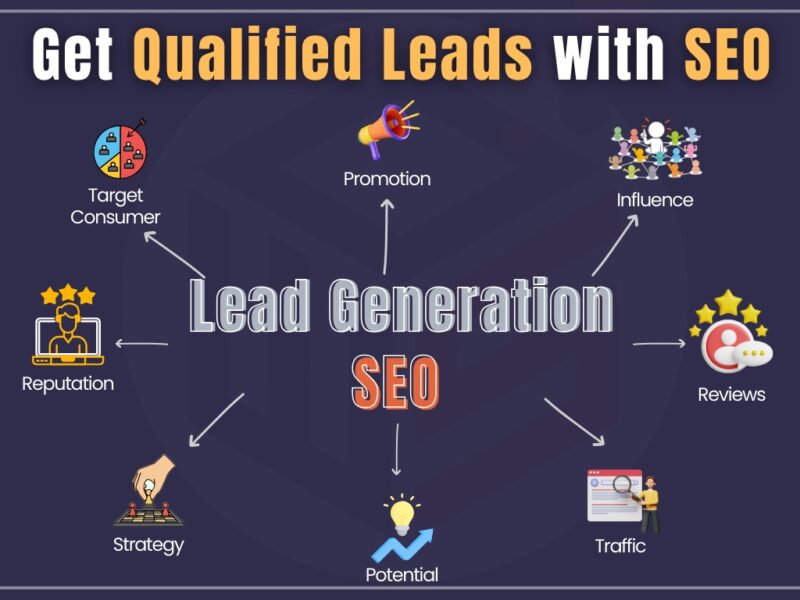
Get Qualified Leads with SEO in 2026
In 2026, SEO is no longer about ranking for as many keywords as possible or driving massive volumes of traffic that never convert. Businesses today are far more concerned with one outcome: generating qualified leads that turn into real revenue.
At Oshin Web Solution, we’ve seen this shift firsthand. Companies come to us frustrated—traffic is growing, impressions look great, but sales teams complain that leads are unqualified, price-sensitive, or simply not ready to buy. This disconnect happens when SEO is treated as a visibility channel rather than a lead generation system.
The truth is simple:
SEO works best when it is built around search intent, buyer behavior, and conversion strategy.
In this in-depth guide, we’ll break down how businesses can use SEO in 2026 to consistently attract decision-ready prospects. You’ll learn how modern lead generation SEO services actually work, how a professional lead generation SEO company structures campaigns, and how to transform SEO into a predictable growth engine.
Why SEO Traffic Alone Doesn’t Guarantee Leads
Many businesses assume higher rankings equal higher revenue. While rankings matter, traffic alone does not pay the bills. The core problem lies in misaligned intent.
A website can rank on page one, receive thousands of visitors, and still fail to generate leads because:
- Visitors are researching, not buying
- Content answers the wrong questions
- Pages lack clear conversion paths
- SEO targets volume instead of intent
SEO in 2026 demands precision, not popularity. Qualified leads come from attracting users who are actively searching for solutions, providers, or pricing—not just information.
The Foundation of Lead Generation SEO: Search Intent
Search intent is the reason behind every Google query. Understanding this intent is the single most important factor in generating qualified leads with SEO.
What Is Search Intent?
Search intent refers to what the user actually wants when typing a query into a search engine. Two users can search similar terms but expect completely different outcomes.
When SEO content aligns with intent:
- Engagement increases
- Bounce rates decrease
- Conversion rates improve
When intent is ignored, traffic becomes meaningless.
The Four Types of Search Intent (And Their Lead Potential)
Not all keywords are created equal. Let’s break down the four types of intent and how they affect lead generation SEO strategy.
1. Informational Intent (TOFU – Top of Funnel)
These users want to learn.
Examples:
- What is SEO lead generation
- How does SEO generate leads
- SEO strategies for businesses
Lead potential: Low (short-term), high (long-term)
SEO strategy:
Educational blogs, guides, and explanations that establish authority and trust.
2. Commercial Investigation Intent (MOFU – Middle of Funnel)
These users are comparing options.
Examples:
- Best lead generation SEO company
- SEO agency for lead generation reviews
- Lead generation SEO services comparison
Lead potential: Medium to high
SEO strategy:
Case studies, comparison articles, service breakdowns, and proof-driven content.
3. Transactional Intent (BOFU – Bottom of Funnel)
These users are ready to act.
Examples:
- Hire lead generation SEO company
- Lead generation SEO services pricing
- SEO agency for qualified leads
Lead potential: Very high
SEO strategy:
Optimized service pages, landing pages, and conversion-focused content.
4. Navigational Intent
Users searching for a specific brand.
Examples:
- Oshin Web Solution SEO services
- Oshin Web Solution contact
Lead potential: High (brand-aware users)
SEO strategy:
Strong brand SERPs, optimized homepage, and contact pages.
Mapping SEO to the Sales Funnel for Qualified Leads
SEO becomes powerful when it mirrors how people buy. A professional lead generation SEO company aligns content with each stage of the funnel.
The SEO Funnel Breakdown
- Awareness (TOFU): Introduce the problem
- Consideration (MOFU): Present solutions
- Decision (BOFU): Drive action
Ignoring any stage weakens lead quality.
Content Strategy for Each Funnel Stage
Top of Funnel (TOFU): Awareness Content
Goal: Educate and attract relevant users
Content types:
- Blog posts
- How-to guides
- Industry insights
Keyword example:
- How to generate leads with SEO
TOFU content builds trust and feeds the funnel, but it should never be your only SEO focus.
Middle of Funnel (MOFU): Consideration Content
Goal: Nurture and qualify prospects
Content types:
- Case studies
- Strategy guides
- Comparison blogs
Keyword example:
- Lead generation SEO services for businesses
This is where SEO begins filtering serious prospects from casual readers.
Bottom of Funnel (BOFU): Decision Content
Goal: Convert visitors into leads
Content types:
- Service pages
- Landing pages
- Pricing and consultation pages
Keyword example:
- Hire lead generation SEO company
This is the revenue-driving layer of SEO.
The 5-Step Process to Generate Qualified Leads with SEO in 2026
Step 1: High-Intent Keyword Research
Forget chasing high-volume keywords. Focus on buyer signals.
High-intent modifiers include:
- Best
- Hire
- Pricing
- Agency
- Services
This is the backbone of effective lead generation SEO services.
Step 2: Create Lead Magnet Content
Lead magnets convert traffic into prospects.
Examples:
- Free SEO audits
- Downloadable checklists
- Strategy consultations
Value-first content dramatically improves lead quality.
Step 3: Build Conversion-Focused Landing Pages
Blogs attract. Landing pages convert.
Every landing page should:
- Solve one specific problem
- Present one clear solution
- Have one primary CTA
This is where most SEO campaigns fail—and where Oshin Web Solution excels.
Step 4: Technical SEO for Conversion Optimization
Traffic without usability kills conversions.
Focus on:
- Fast page load times
- Mobile optimization
- Clear CTAs
- Simple forms
Technical SEO directly impacts lead volume and quality.
Step 5: Authority Building & Promotion
Ranking competitive, transactional keywords requires authority.
Key tactics:
- Quality backlinks
- Internal linking
- Brand mentions
Authority attracts high-intent users and filters out low-quality traffic.
Measuring SEO Success for Lead Generation
SEO success is not traffic—it’s leads and revenue.
Key Metrics to Track
- Leads by keyword and page
- Cost per qualified lead
- Organic conversion rate
- Rankings for commercial keywords
- Marketing Qualified Lead (MQL) rate
At Oshin Web Solution, we align SEO data with CRM insights to track real business impact.
Advanced SEO Lead Generation Trends for 2026
AI-Powered SEO Strategy
AI accelerates:
- Intent analysis
- Keyword clustering
- Content optimization
Used correctly, AI improves efficiency without sacrificing lead quality.
Zero-Click SERP Optimization
Not every search results in a click.
Optimizing:
- Featured snippets
- Meta descriptions
- Value-driven headlines
keeps your brand visible and top-of-mind.
E-E-A-T Still Matters
Experience, Expertise, Authority, and Trust are more important than ever.
Demonstrating:
- Real results
- Transparent authorship
- Client success stories
filters serious buyers from low-intent visitors.
Turning SEO into a Qualified Lead Engine
SEO in 2026 is no longer about traffic—it’s about precision, intent, and conversion.
When done right, SEO:
- Attracts decision-ready users
- Supports the entire sales funnel
- Produces predictable, scalable leads
At Oshin Web Solution, our approach to lead generation SEO services is built on one principle: quality over quantity. We design SEO strategies that attract buyers—not browsers—and convert organic traffic into real business opportunities.
If you’re looking for a trusted lead generation SEO company that focuses on outcomes, not vanity metrics, it’s time to rethink your SEO strategy.
Conclusion
Qualified leads don’t come from ranking everywhere—they come from ranking where it matters. By aligning SEO with search intent, funnel stages, and conversion-focused execution, businesses can turn SEO into a long-term lead generation engine.
SEO is no longer a guessing game. With the right strategy, tools, and expertise, it becomes one of the most reliable channels for sustainable growth in 2026 and beyond.
FAQs
How long does it take to generate leads from SEO?
Most businesses see initial lead activity within 3–6 months. Consistent, qualified leads usually follow as authority and rankings improve.
What is the most important factor in SEO lead generation?
Search intent alignment. Without it, traffic will never convert into qualified leads.
Which content converts best for SEO leads?
High-intent service pages and landing pages supported by case studies and proof-driven content.
Are backlinks still important for lead generation SEO?
Yes. Quality backlinks help rank competitive, transactional keywords that drive high-quality leads.
How do I track which SEO keywords generate leads?
By integrating GA4 with your CRM and tracking form fills, calls, and inquiries by landing page and keyword.
Follow Us On: Facebook, Twitter, LinkedIn, Instagram & YouTube.

Sandeep Kumar is the founder of Oshin Web Solution and a seasoned digital marketing expert with over 12 years of experience. He specializes in SEO, paid marketing, and online brand growth, helping businesses achieve measurable results in the digital space. When not strategizing campaigns, Sandeep enjoys exploring the latest marketing trends and sharing his insights with the community.